








Blog

Mobile Networks

Hierarchical QoS on PCEF: How to Manage Service Priorities

A subscriber is downloading a torrent while making a call over a messaging app, but the other person's voice keeps cutting out, and then the call drops. They open YouTube, and the video keeps freezing to buffer. Naturally, the subscriber decides the operator's network is bad, even though the radio link and coverage have nothing to do with it: their own torrent has eaten up all the bandwidth available on their plan.

Mobile Networks

Scaling in a CUPS Architecture: How to Grow Without Disrupting Subscribers

When scaling the User Plane horizontally, new traffic-processing nodes are added to the cluster. But the entire traffic flow cannot simply be redistributed from scratch. Active sessions must retain their state and continue to be processed on the same node. Therefore, new connections and existing sessions are distributed according to different rules, while active sessions are migrated gradually. In this article, we explain why disruptions occur and how User Plane scaling works when increasing capacity does not come at the expense of inconvenience for individual subscribers.

Mobile Networks

CUPS for PCEF/PGW: why separate the Control Plane and User Plane in the mobile core

In an operator's network, session control and data transfer grow at different rates. The subscriber base adds a few percent a year, while traffic grows by tens of percent. If both functions live in a single node, they have to be scaled together, forcing the purchase of resources that may not actually be needed.

Solution
Stingray SG Functionality

Support for different interface types in the Stingray platform: dpdk_engine=7

As an operator's network evolves, so does its core. It comes to include more and more switches and routers with different interface types, reflecting different stages of infrastructure development.

Mobile Networks
Stingray SG Functionality

One server instead of a rack: the new Stingray PCEF processes up to 32 million sessions

VAS Experts' development team has increased the performance of the Stingray PCEF product. After optimization, the solution can process up to 110,000 requests per second while serving 32 million active sessions on a single server.

Mobile Networks
Stingray SG Functionality

How have mobile tariffs changed, and where does PCEF fit in?

For an operator, the tariff has become a tool for managing demand, load, and revenue. Through the tariff grid, an operator can promote its own services, sell additional traffic, offer premium service priority, connect IoT devices, and put together corporate packages.

News

On the Company's Inclusion in the EU Sanctions List

We, VAS Experts, wish to share our position regarding the company's inclusion in the latest sanctions list of the European Union. The grounds cited were our production of SORM-class solutions – lawful interception and data retention technology used for operative investigative measures.

News
Stingray SG Functionality

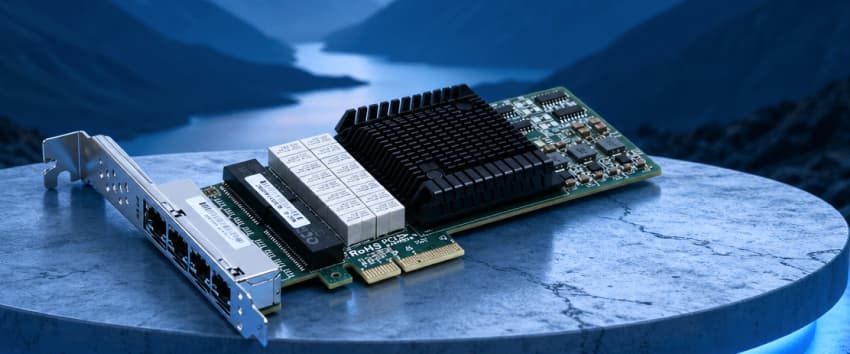
Bypass support for LR-LINK network cards is now available in Stingray Service Gateway

We continue to expand the list of compatible equipment! Hardware Bypass functionality is now available not only for Silicom network cards, but also for LR-LINK cards based on Intel chipsets.

Solution
Stingray SG Functionality

NMS as a unified control loop for Stingray

While a network includes a limited number of services, operations are typically based on CLI, SNMP monitoring, and a set of internal scripts. But as the infrastructure grows, the number of components increases, and control points start to spread across different systems.

Security

VAS Experts shares expertise on ISP-level DDoS protection in SafetyDetectives Industry Roundup

VAS Experts has contributed expert commentary to the SafetyDetectives article "The Most Overlooked Cybersecurity Threats and How to Defend Against Them," a roundup featuring industry perspectives on the internal blind spots and false assumptions that continue to expose organizations of every size.