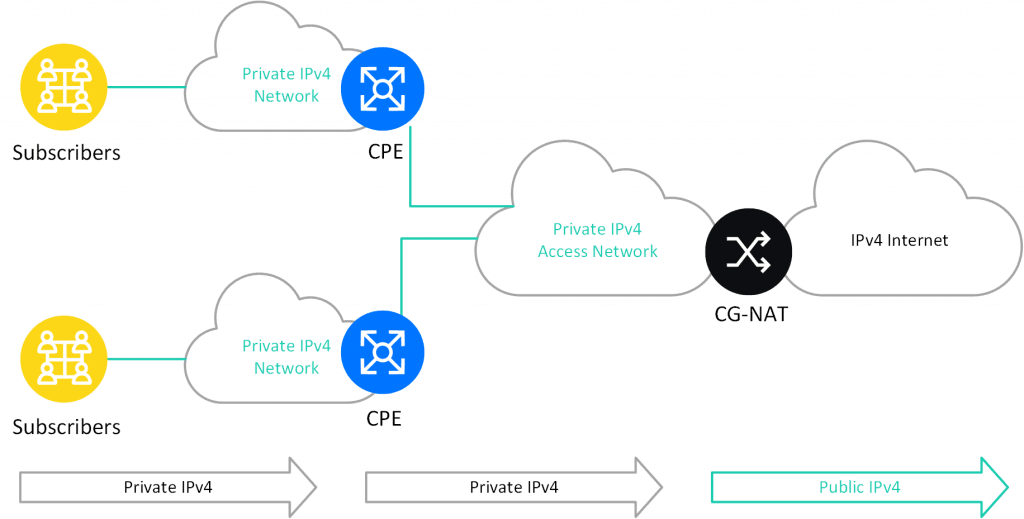
The CG-NAT function uses Full Cone NAT technology, which allows sending packets coming from any external system via an external displayed TCP/UDP port, which is a source of traffic from the subscriber.
Subscribers inside the NAT access each other’s public addresses without translating and forwarding packets outside the device.
A limit of the number of TCP and UDP connections per subscriber is set individually for each IP address pool, which allows the operator to sparingly allocate address space resources between corporate and private clients. In the absence of activity, unused connections are closed, freeing up ports.
All subscriber connections from one IP-private internal address are bound to one external address.
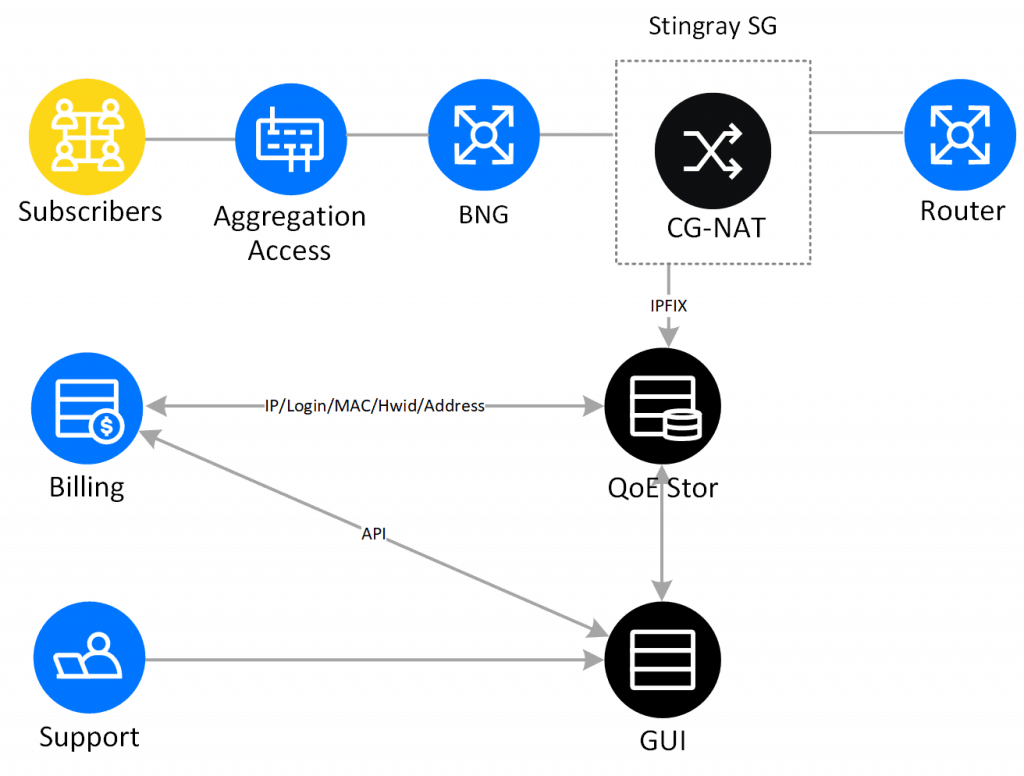
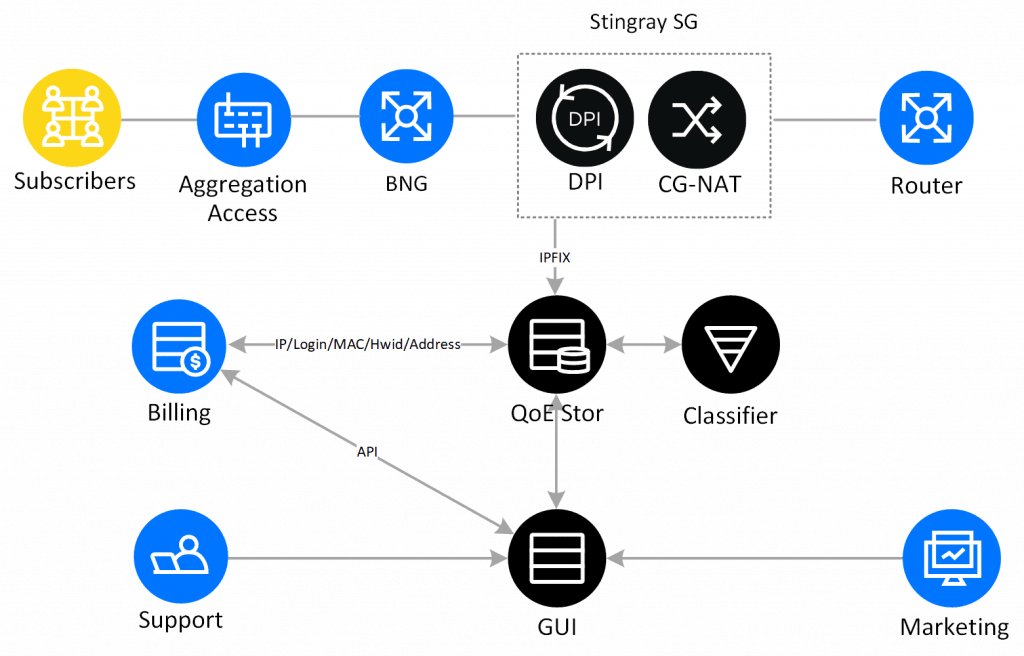
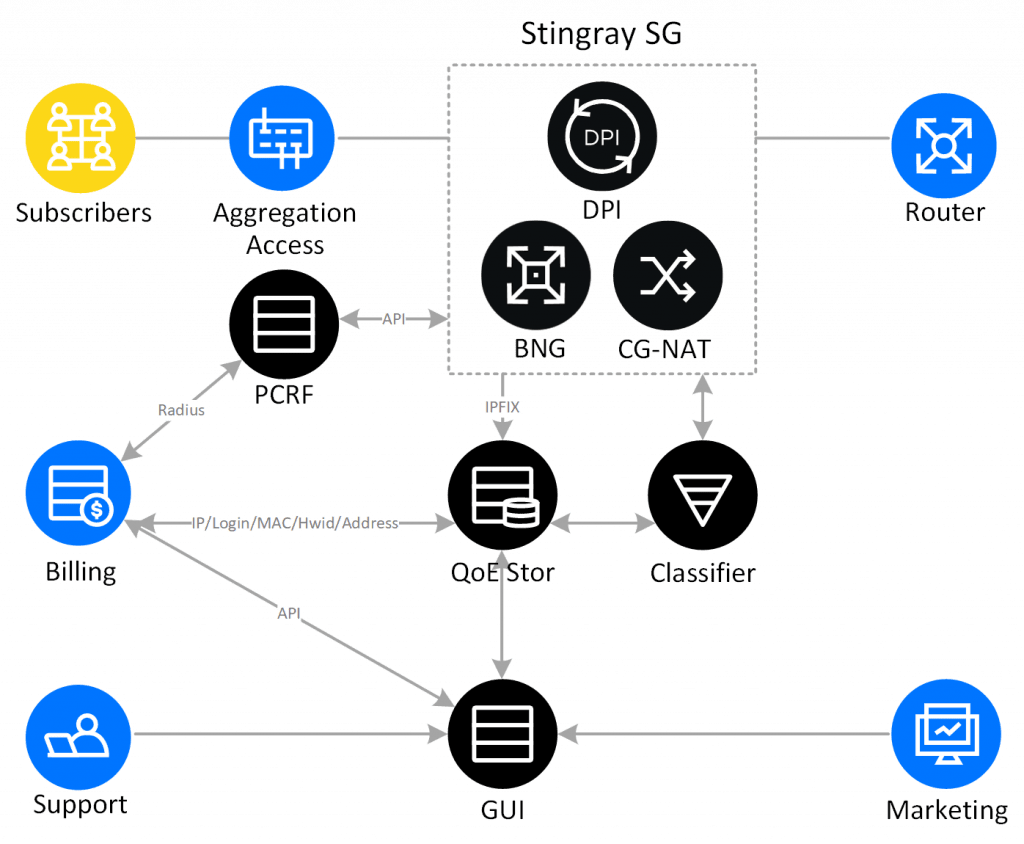
Network translations are recorded in a text file or transmitted to an external collector via the IPFIX protocol (also known as NetFlow v10).
The platform supports up to 128 million simultaneous sessions in each hardware and software system and handles traffic up to 120 Gbps.
Predictable NAT behavior is provided by the Full Cone and HairPinning functions. User quotas ensure an even distribution of public IP ports between subscribers, and viruses and malware cannot deplete their resources.
It is important for operators to maintain connectivity for all application services and users while ensuring application integrity. ALG ensures that protocols — such as FTP, TFTP, RTSP, PPTP, SIP, ICMP, H.323, ESP, MGCP and DNS — remain operational. Many legacy NAT implementations do not provide this level of transparency.
Integrated protection prevents the passage of a huge volume of traffic of multiple-vector DDoS attacks. The CG-NAT solution ensures maximum operability of network resources for processing subscriber traffic and preventing service interruptions.
In CG-NAT, VLAN support saves ports in the operator’s equipment and increases the efficiency of using NIC. This makes it possible to determine downstream and upstream traffic not by NIC, but by VLAN ID, which in turn makes it possible to use the same network interface card for both downstream and upstream traffic. This option is especially effective when used together with LACP.
Link Aggregation Control Protocol allows you to combine several physical ports to form a single logical channel and increase fault tolerance.
With an increase in the number of subscribers and the volume of traffic being transmitted, it is possible to dynamically scale and boost bandwidth by upgrading the server or increasing the number of virtual NATs in the Telco Cloud.
The reliability of the solution is guaranteed by using the standby modes Active-Standby and Active-Active. In both variants, two devices are involved: if the first one (active) fails, then traffic is switched to the second one without loss using routing protocols.