
NFV troubles
Many operators are transitioning to the NFV network virtualization platform to provide service providers with greater speed and flexibility in delivering services, as well as to automate network stacks. But, like all new technologies, NFV has its growing pains. Let’s look at the main problems that can be encountered when building virtualized networks and ways to overcome them.
New technologies
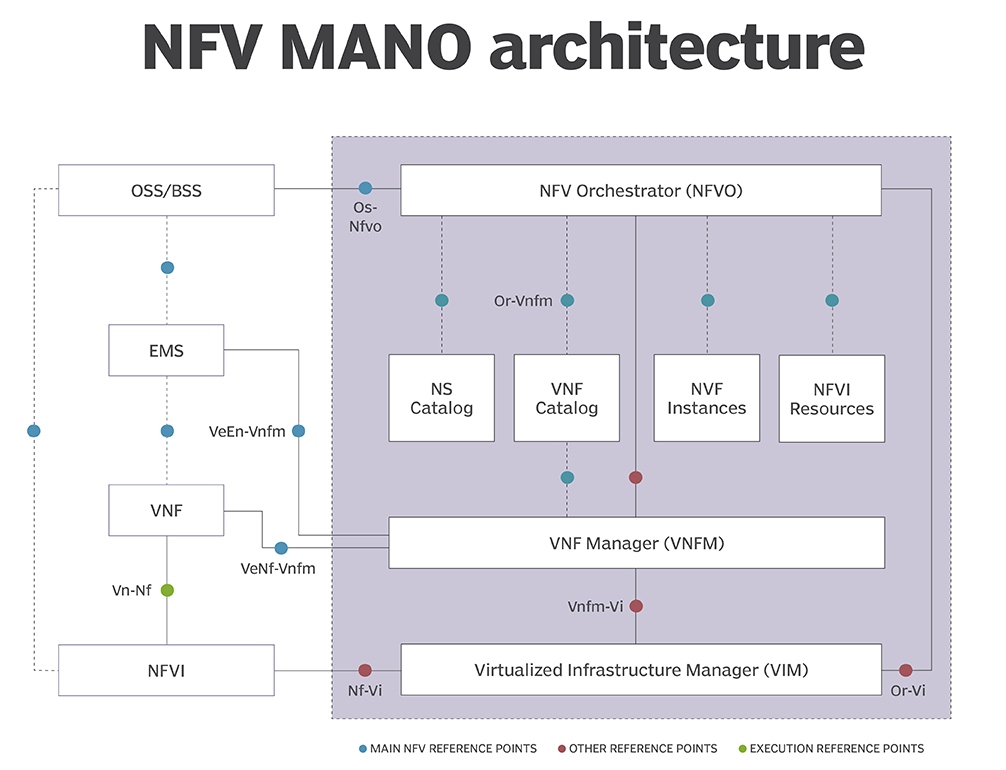
Experience with cloud infrastructure can help operators deploy NFV networks, but understanding the intricacies of modern technologies is still not easy. In addition, the principles of creating and managing NFV differ significantly from classic network architecture. Operators need to get used to new management and orchestration (MANO) systems for virtual services and functions, which do not provide all the tools necessary for a smooth migration. For the transition to NFV to be successful, it is necessary to consider and decide in advance on issues of automation, management, orchestration, and policy creation.
Outdated infrastructure
One of the advantages of NFV is the ability to reduce capital expenditures (CAPEX) and operating expenses (OPEX), as well as reduce the time administrators spend managing data centers. However, outdated networks have become a serious problem for the creation and development of NFV. Some older versions of equipment will not be updated to support this technology. Despite this, some network virtualization applications will work on outdated network infrastructure, allowing telecom operators to launch NFV now and invest the profits in more complex NFV-related projects.
Security issues
The more new network functions NFV provides, the more new risks they carry. Software is inherently less secure than hardware. Routers and firewalls on dedicated hardware are more difficult to hack. Software is also more vulnerable to distributed denial-of-service (DDoS) attacks (DDoS) attacks. It is necessary to carefully protect the platform from constant threats, keep track of updates, and prevent the use of old versions that contain security holes. The virtual network hypervisor must provide a high level of isolation between machines so that if one of them becomes infected, the virus cannot spread to the others.
Lack of standards
Another serious problem facing the virtualization market is the need to create standards for communication between NFV components. The development of such standards usually takes several years, but the telecommunications industry is already ready to begin deployment and cannot wait that long. The standards must be prepared by the European Telecommunications Standards Institute (ETSI), which is the main driving force behind standardization in the market. At the same time, standards have been proposed by other associations, but no general consensus has been reached. Operators can participate in the development of these standards through the ETSI Industry Specification Group, which is open to both its members and other companies.

Not enough business cases
Another thing getting in the way of network virtualization is the lack of well-thought-out and implemented business cases. Vendors try to make NFV look perfect and even describe features that can’t be done with it. This leads to disappointment for the telecom operator during implementation when they run into limitations. On the other hand, some vendors are unsure about NFV-based solutions and do not try to be convincing in their proposals, leaning towards classic network architecture. In addition, some of the advantages of this technology, such as fast startup, network optimization, and innovative features, are difficult to measure, which creates additional difficulties in describing good business cases. The technology must be implemented and its experience described, otherwise it will be difficult to promote it on the market.
Fortunately, all of the difficulties described above can be overcome. Every new technology has its pitfalls and teething problems in the early stages of development, which disappear when large-scale projects are rolled out. The same fate awaits NFV.
It is very important to keep up with the times and use modern technologies such as NFV for network construction and DPI for traffic management. For more information about the advantages of the Stingray Service Gateway system, its effective use on telecom operators’ networks, and migration from other platforms, please contact the specialists at VAS Experts, the software developer for telecom operators.