
In this article, we’ll break down how operators can distribute traffic, which trends are driving this, and where PCEF fits in.
Mobile market trends
Despite the rapid spread of mobile internet, its penetration level remains uneven. According to GSMA, around 4.7 billion people use mobile internet, while another 3.4 billion remain outside mobile data networks. At the same time, operators work in fundamentally different conditions: in some markets they sell 5G profiles and premium access, while in others the business is still built around inexpensive prepaid packages.
Market analysis and VAS Experts’ experience show that regional differences mostly come down to the tariff storefront. In Europe, large packages and family plans are popular; in North America — multi-tier unlimited plans with different traffic priority levels. In Asia, Africa, and the Middle East, short prepaid packages, content services, social tariffs, and special access conditions for specific resources are in demand.
But no matter how different the tariffs look on the surface, the network has to solve the same set of tasks to implement them: count traffic across different buckets, separate messengers from general traffic, manage speed after a limit is used up, apply separate rules for video, roaming, tethering, and IoT, and ensure access to critical services.
For the subscriber, all of this looks like a tariff plan, while inside the network it’s a set of policies that need to be applied to every subscriber and every flow in real time. Between these two levels, there needs to be a component that translates the commercial terms of a tariff into concrete actions on traffic.
5 use cases your subscribers are already waiting for
Let’s show, using five trending scenarios, how different tariffs are built from the same network.
GB package with speed reduction after the limit is reached
A subscriber gets a traffic package, say 30 GB. Once the limit is used up, the internet doesn’t shut off, but the speed drops to a set level. Operators implement what’s known as a Fair Usage Policy (FUP). The detailed terms are usually spelled out in the contract.
| What happens at the network level | What PCEF does | |
|
PCEF counts consumption, receives a quota-exhaustion event from billing, and applies the new policy. For example, it switches the subscriber from the base profile to a limited speed or fully blocks certain services. If the subscriber buys an additional package, PCEF restores the original conditions. | |
| What the operator gets | ||
| Access isn’t interrupted after the limit is reached — the subscriber switches to a speed-limited mode. This creates a foundation for selling extra gigabytes, “turbo buttons,” and upselling to plans with larger data allowances. | ||
Stingray PCEF keeps a real-time record of package usage through Gy-interface integration with the OCS, and stores several speed profiles for a single subscriber.
The operator sets service rules for different quota states, and once the quota is exhausted, the active session is automatically switched to speed-limited mode without dropping the connection. When the subscriber buys more data or presses the turbo button, billing sends a matching event, and PCEF restores full speed in real time.
Subscribers can be warned in advance as they approach their limit — via redirect to an informational page through the Captive Portal, which increases conversion into additional purchases.
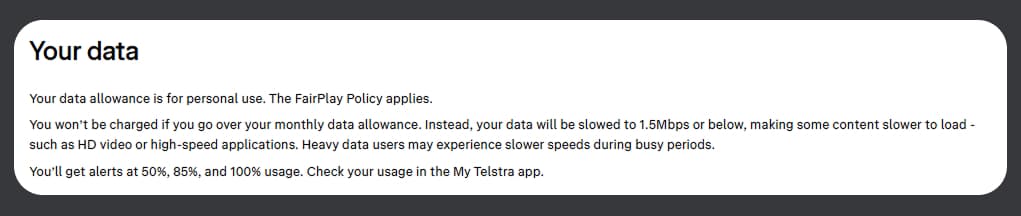
Figure 1 — Package speed limits after the limit at Telstra (Australia)
Here the earnings model itself changes. Under a finite data-package scheme, it’s important for the operator to strike a balance between restrictions and subscriber convenience. The lower the post-limit speed, the higher the likelihood the user buys more gigabytes or activates an add-on option — but overly strict limits can hurt the user experience.
Speed reduction works differently: after the limit is reached, the subscriber keeps access to the network, just under different service terms. The subscriber stays online and decides whether to pay for higher speed right now. The managed parameter is no longer the remaining gigabytes, but the profile the session is in. Without this shift, the other mechanics below can’t be built.
Zero-rating and unlimited access to specific services
Messengers, social networks, music, or video don’t count against the main package.
| What happens at the network level | What PCEF does |
| Every flow needs to be assigned to the right category. WhatsApp, Telegram, or a music service need to be counted separately from general internet traffic. | Applies a separate policy to the traffic of the selected service: doesn’t deduct it from the main bucket, counts it in a separate bucket, or passes statistics to billing under a special rule. |
| What the operator gets | |
| Can build content tariffs, partner packages, and promote its own services without manually maintaining lists of IP addresses. | |
Service recognition is based on traffic signatures in combination with Stingray Service Gateway. Stingray PCEF then applies the configured service and billing policies to that traffic. Telegram, WhatsApp, or a video platform are identified by the type of traffic transmitted, not by an IP address list.
The operator creates an application bucket with zero rating for the chosen service, and PCEF implements a separate rating for zero-rated traffic versus the rest of internet traffic, so the unlimited traffic doesn’t reduce the main quota. Statistics for the bucket are sent to billing separately, so the unlimited traffic doesn’t consume the subscriber’s main quota. For accurate service recognition, Stingray Service Gateway automatically updates application signatures and doesn’t require manual maintenance.
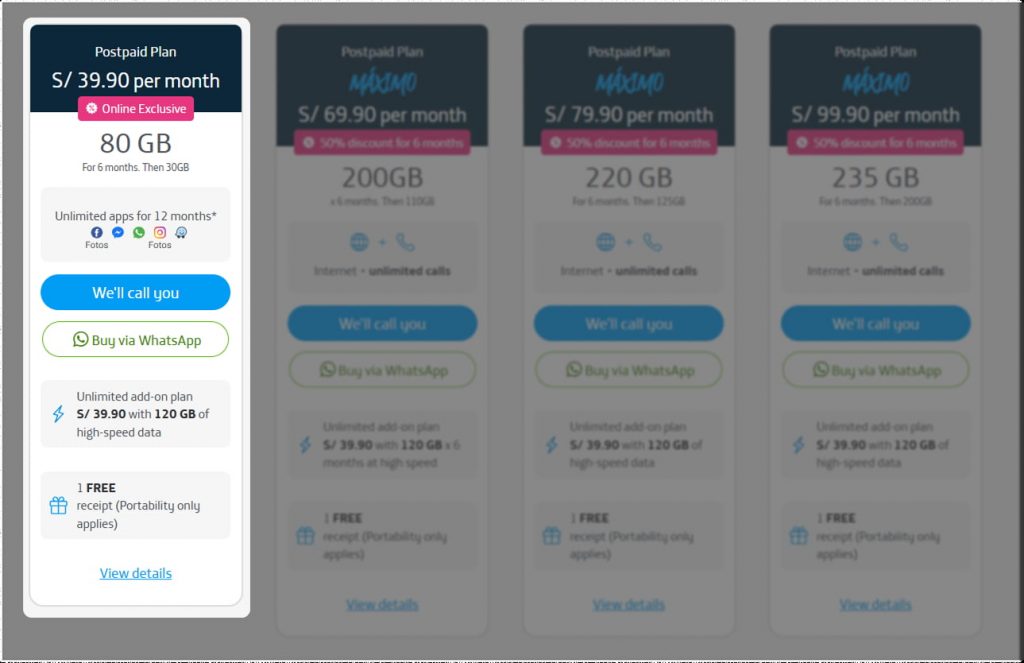
Figure 2 — Movistar (Telefónica del Perú S.A.A.) (Peru) data plan with unlimited social media usage
How long zero-rating stays accurate depends on what criteria are used to identify the service. If recognition is based only on lists of IP addresses, they need to be constantly updated. Otherwise, the service’s traffic may start eating into the package despite the promise that it wouldn’t. Accurate recognition by application and by domain is provided by the Stingray DPI platform. Extended classification and automatic signature updates are available.
Multi-bucket billing
A single tariff includes several packages: general internet, video, social networks, music, roaming, and tethering. Each category has its own limit and its own rules.
| What happens at the network level | What PCEF does |
| Traffic can’t be counted as a single overall figure. Flows need to be split into buckets, and rules need to be changed separately for each category. | Links a flow to the right bucket and applies a separate policy to it. If the video package runs out, the rules change for video; if the general package runs out, messengers can keep working. |
| What the operator gets | |
| The operator builds more flexible tariffs without being tied to a single gigabyte package. From the same resources, it’s possible to create a mass-market tariff, a youth package, a roaming option, or a partner package. | |
Each traffic category is placed into its own bucket (rating group) with its own limit and unit of measurement, and DPI-based classification automatically sorts video, social networks, music, and roaming into their respective buckets. Quota exhaustion is handled separately for each bucket, so running out of the video package doesn’t affect messengers. All buckets are synchronized with the OCS via Gy.
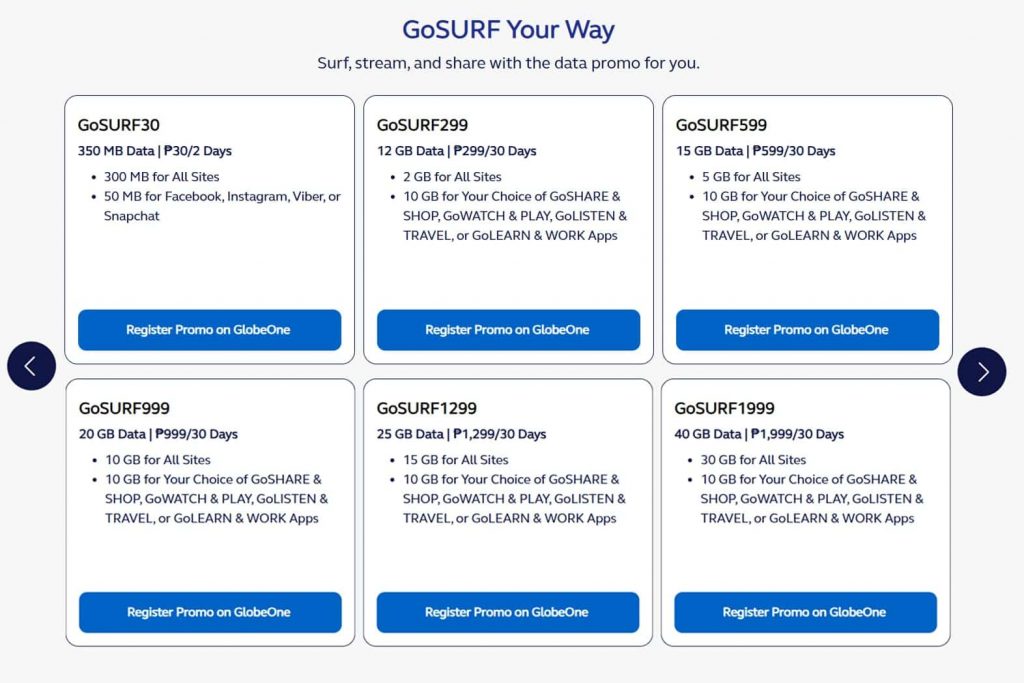
Figure 3 — Multi-bucket tariffs from Globe Telecom (Philippines)
The flexibility of a tariff is determined not by the number of packages but by the independence of the buckets. When exhausting one bucket doesn’t affect the others, any number of tariffs for different segments can be built from the same categories and rules.
Tethering
On the smartphone itself, internet works without restrictions, but sharing it with a laptop or other devices is billed separately, limited in volume, or available for an extra fee.
| What happens at the network level | What PCEF does |
| Regular smartphone traffic needs to be distinguished from tethering traffic, and separate rules applied to it. | Splits the donor device’s traffic (the device sharing the connection) and the acceptor device’s traffic (the device consuming the shared connection) into separate buckets. Independent speed limiting is available for tethered traffic, along with passing information about the start of tethering to billing. Meanwhile, the donor’s own traffic continues to be served under the base profile. |
| What the operator gets | |
| The operator controls the load created by tethering and can offer it as a separate service, without mixing it into regular smartphone access. | |
Stingray PCEF detects tethering by characteristic hotspot traffic signs and separates it into its own bucket with its own limit and speed. The rule splits tethered and smartphone traffic into different profiles: the smartphone runs on the base profile, while tethered traffic is either speed-limited or redirected to a paid-service activation page. When the volume is exceeded or paid hotspot access is activated, the event is passed to billing.
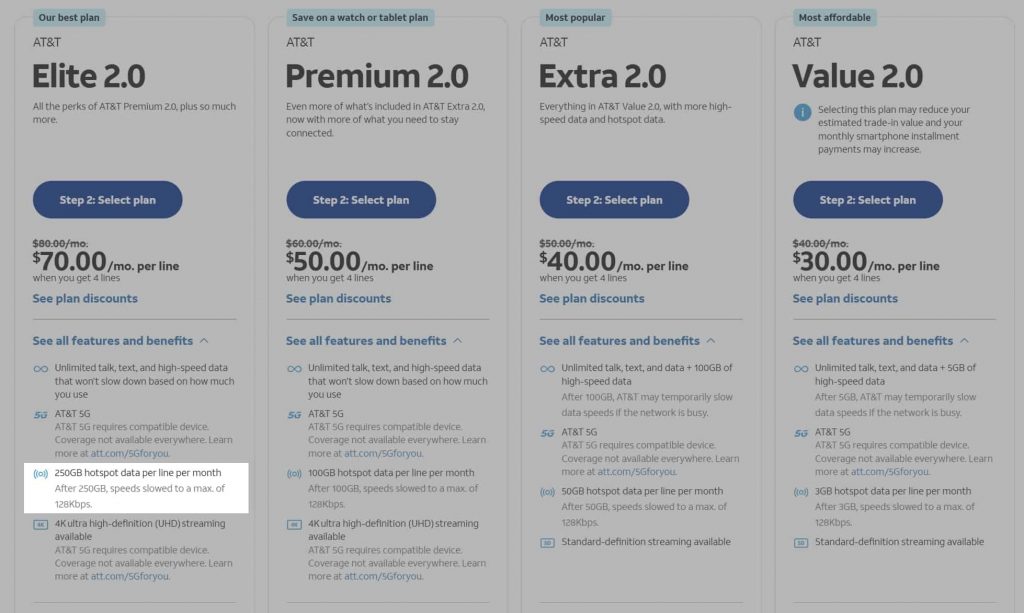
Figure 4 — AT&T (USA) plans with hotspot traffic restrictions
Tethering is billed based on how the connection is used rather than on the content of the traffic, and the cost of getting it wrong is higher here than in the other scenarios. Crude detection punishes honest subscribers, while its absence hits the network’s load. Before launch, it’s worth checking the accuracy of tethering detection and the system’s behavior in case of false positives.
Time-based packages and night unlimited
A subscriber activates a one-day package, night unlimited, a weekend pass, or a turbo button for a few hours.
| What happens at the network level | What PCEF does |
| The policy has to switch on at the right moment, apply to the active session, and turn off once the period ends. | PCEF receives a service-activation event, applies the temporary rule, and restores the base policy once the period ends. For example, at night traffic isn’t deducted from the main package, and in the morning it’s counted under the normal rules again. |
| What the operator gets | |
| The operator can quickly launch short paid options, test demand, and sell additional scenarios without changing the base tariff. | |
Time-based tariffs work through time-bound policies and activation triggers — either on a schedule or by command from the OCS when an option is purchased. During the active period, a priority rule is switched on, and once the interval ends, the product automatically restores the base policy without dropping the session. Changes are applied to active sessions on the fly via RAR over Diameter.
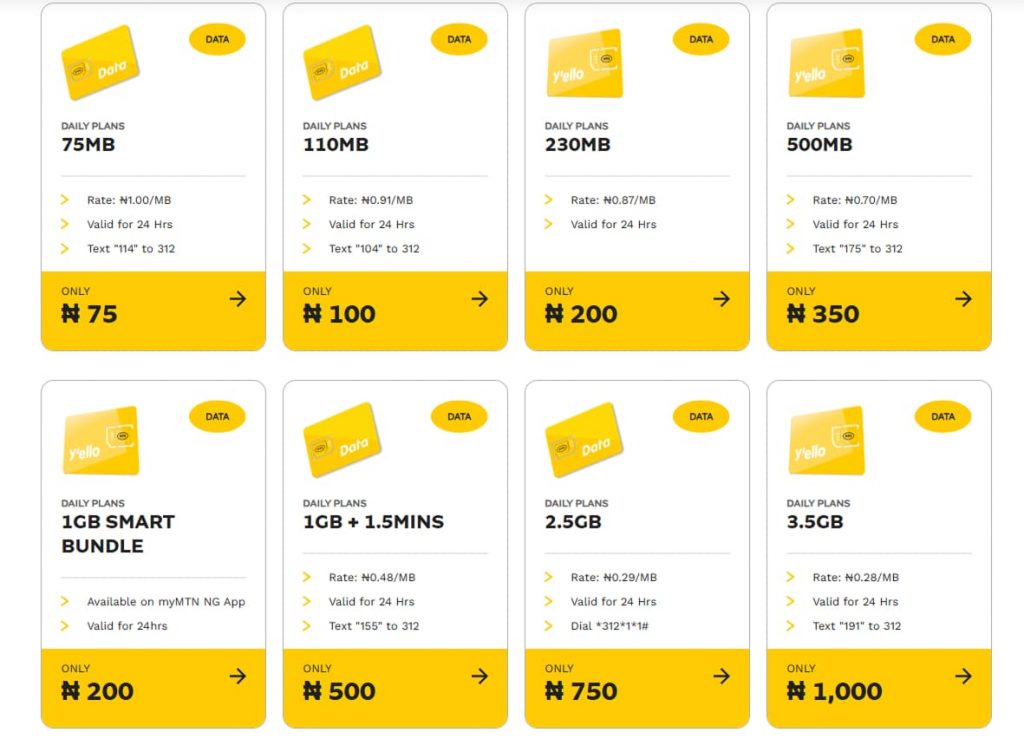
Figure 5 — An operator’s grid of time-based tariff plans at MTN (Nigeria)
Conclusion
All five mechanics rely on the same execution layer. Stingray PCEF, together with DPI, recognizes services and traffic types, sorts them into buckets, applies the necessary policies, and exchanges events with billing and the OCS. Thanks to this, an operator can build different tariffs from the same network, and the speed of rolling out new options no longer depends on equipment procurement or lengthy development work.
The mobile tariff market is changing fast, and the winners will be those who can turn an idea into a working product just as quickly. In my view, this is exactly the capability that flexible traffic management gives an operator: the tariff lineup becomes a living tool that can be rebuilt to match demand as many times as the market requires.