BRAS (BNG) Implementation
For successful implementation of a BNG solution, ensuring stable, reliable, and long-lasting operation, several important conditions must be met:
- Choose the solution type (a hardware BNG/BRAS from a reputable manufacturer, a software BNG on the x86 platform, or a free Linux-based solution) – we wrote about this in the previous article.
- Select a ready-made network organization scheme or create your own, taking into account the BRAS implementation.
- Enter into an agreement with an integrator for implementation and support of the solution, or hire or train in-house specialists.
- Purchase a service contract to ensure the availability of updates and prompt repairs for the equipment.
- Install, integrate with other network components, configure, test, and launch the solution.
The implementation of each of these conditions depends heavily on the solution you choose. Let’s take a closer look at each of them.
Choosing a Solution Type
By choosing one of the presented solutions, you either invest a significant amount of money upfront and forget about the need for independent configuration and maintenance for a while, or you save money during the implementation phase but invest a significant amount of time and effort.
Hardware BNG from Cisco, Juniper, Huawei, and Ericsson offer high performance and reliability: if configured and integrated into the network correctly, there will be no complaints about stability and performance for a long time. Purchasing devices on the used market offers little in the way of reliability, as devices of this class have a long service life. However, in this case, you lose warranty support and the features required for new models.
To ensure the reliability of a software BNG on an x86 platform, you must select a high-quality x86 server (performance and stability depend on it) and properly install and configure the software. The advantages of this solution include a variety of additional features (NAT, DPI, and others) and regular platform updates to improve reliability and stability.
A free Linux solution is a pig in a poke, and its reliability will largely depend on the enthusiasm of your network engineers who will configure and operate the system.
Network organization diagram
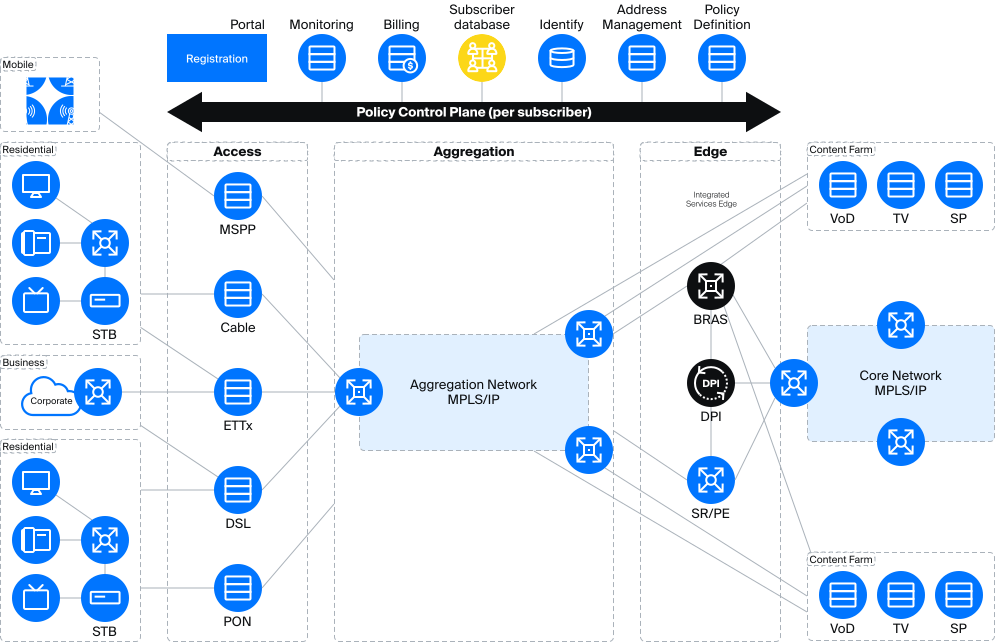
Each hardware BNG/BRAS manufacturer offers its own reference connection scheme for the telecom operator network. There may be several such options, so it’s easy to find a convenient one. And if you order implementation from an integrator, their network architects can develop a customized solution.
Software BNG manufacturers also offer ready-made schemes but can individually review your project and assist with implementation. There’s no need to engage an outside integrator; everything is handled within technical support. Another advantage of a software solution is the ability to test it: you can request a software copy from the developer (for example, Stingray Service Gateway from VAS Experts), install it, configure it, test its functionality and ensure it meets your requirements, and only then decide whether to purchase.
If you choose a free Linux-based solution, you’ll have to develop your own implementation plan, as it’s very difficult to find documented experience with such projects. The solution is free, and its developers don’t invest additional effort in documentation, distributing it as is.
Implementation and Support
Hardware and software BNG are commercial solutions, allowing for turnkey implementation, and a technical support agreement with the manufacturer eliminates the need to hire a specialist. However, with hardware BNG, you can send your network engineers to official training courses and quickly train them to become qualified specialists. Becoming a guru with software BNG is more difficult; you’ll need to figure everything out yourself, but this isn’t necessary in most cases—technical support is provided by the developers themselves, who will help resolve any issues both during implementation and during operation.
Integrators often suggest implementing hardware BRAS because they offer the highest profit margins. Therefore, if you choose a software solution, you’ll have to handle the design and installation yourself.
With a free solution, you’re on your own. The developer provides the product as is. You can ask questions directly to the author or on specialized forums, but there’s no guarantee they’ll help or answer your questions. It’s also extremely difficult to find specialists experienced in configuring free BRAS: if someone invests in their knowledge and skills, they want to get a return on their investment, and it’s more rational to take Cisco courses than to learn software that might only be useful once in a lifetime.
Service Contract
With hardware BRAS, as with any other network equipment from a reputable manufacturer, everything is simple and expensive. You sign a service contract and are confident that if any component or the entire device fails, you’ll receive a replacement as quickly as possible. Firmware and software updates are also covered by the service contract.
If you choose software-based BNG/BRAS on an x86 server, you’ll need two contracts: a service contract with the hardware platform (server) manufacturer and a technical contract with the software developer. The first contract covers hardware repairs and replacements, while the second provides technical support and up-to-date updates. At your own risk, you can choose not to sign a contract with the server manufacturer, perform regular backups, or have a backup device to ensure fault tolerance.
With free BNG/BRAS on Linux, you don’t sign any contracts and are simply responsible for maintaining and updating all system components yourself. This is a significant risk and may only be suitable for small internet providers.
Installation, Configuration, and Operation
After selecting a solution and signing all necessary contracts, the system is installed. Hardware BRAS is typically installed, configured, and commissioned by an integrator contractor. The integrator develops documentation and integrates with other network components. Telecom operator specialists undergo training in administering the installed platform and, with the assistance of the manufacturer’s technical support, operate it.
Software BRAS is typically installed independently on pre-prepared equipment. This procedure can be performed by either the customer’s specialists or the manufacturer’s representatives, and is free of charge under a technical support agreement. Further operation is performed using the provided documentation or after completing training courses.
Hardware and software BRAS do not present integration issues, as these platforms are well supported by the manufacturers and have reference connection diagrams.
Installation, configuration, and operation of free BRAS solutions depend on the specific specialist assigned to the task. If the specialist is sufficiently qualified, they will be able to resolve most limitations and issues that arise during testing. But in any case, the reliability of this option depends on many factors and makes it less profitable for broadband operators.
How to properly implement BNG
In summary, hardware-based BRAS solutions appear to be the most reliable and stable. However, the cost of such solutions and service contracts at current exchange rates is very high, especially for regional internet service providers. Revenue from telecom services is stagnant, and investment in equipment from reputable manufacturers is a constant requirement.
Free Linux-based solutions require minimal financial investment, but the lack of support, documentation, and guarantees of stable operation make them unsuitable for large internet service providers and telecom operators, who require strict SLAs and high service quality.
Software-based BNG/BRAS solutions on standard x86 servers appear to be the most attractive. Their hardware platform ensures high reliability and performance, while the software is developed by professionals and is backed by qualified support. Such solutions receive regular updates that fix bugs and add new features. In terms of financial costs, this is also the most cost-effective option, as you pay for stable, reliable software and technical support without overpaying for the hardware.
Such solutions may contain additional functions that can also be used by telecom operators, such as NAT, DPI, as is the case with the Stingray Service Gateway system from VAS Experts.